Free guide + face shape test
Oblong Face Shape: Complete Guide, Hairstyles & Free Face Shape Test
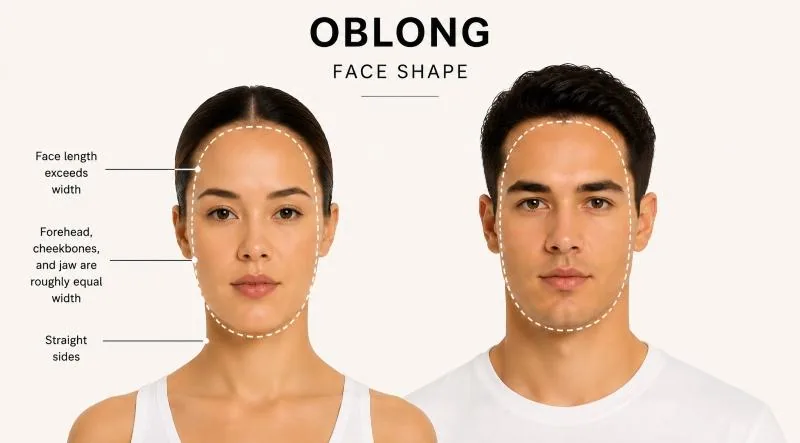
An oblong face is noticeably longer than it is wide, with a forehead, cheekbones and jawline that sit at roughly the same width and sides that run fairly straight. Use the free test to estimate your own proportions, then explore the haircuts, beard styles and glasses that add width and balance to a longer face.
- Runs in your browser
- No photo is uploaded
- Results in seconds
Free tool
Free Oblong Face Shape Detector
Upload a clear, front-facing photo or use your camera. The tool maps facial landmarks in your browser, measures four key distances and estimates which face shape your proportions are closest to.
Drag and drop a face photo here
JPG, PNG or WebP. Front-facing, hair pulled back, even light.
Hold the camera at eye level and fit your face inside the outline.
Happy with this photo? Your face should be front-facing, well lit and fully in view.
Your photo is processed on your device and is never uploaded to or stored on our server. Only the detection library and model files are downloaded.
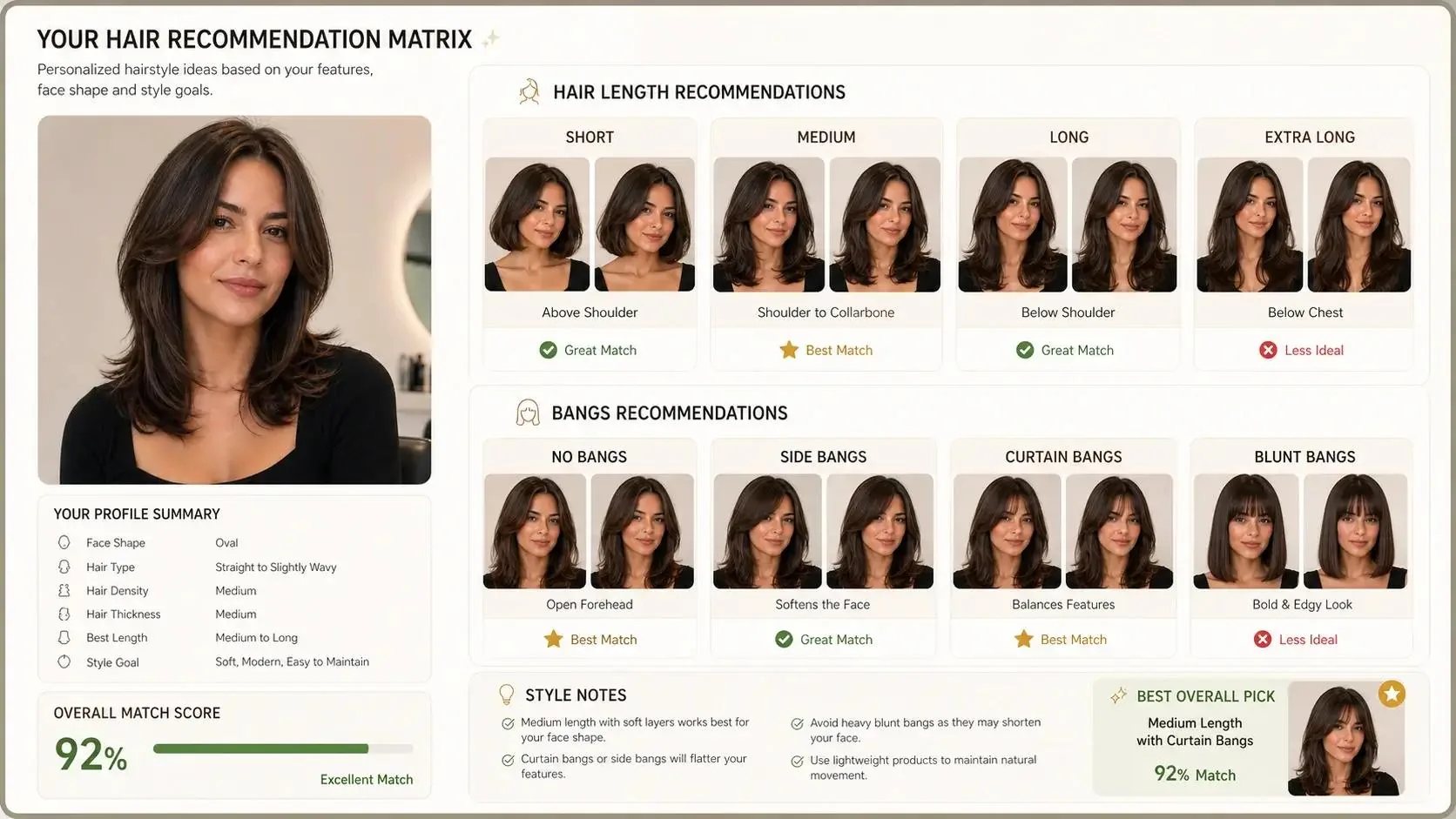
Your Hair Recommendation Matrix
Personalised hairstyle ideas based on your estimated face shape and proportions.

Your Profile Summary
- Face Shape
- –
- Length : Width
- –
- Forehead
- –
- Cheekbones
- –
- Jawline
- –
- Best Length
- –
- Style Goal
- –
- Source
- –
Shape Match Score
0%
Hair Length Recommendations
-
Short
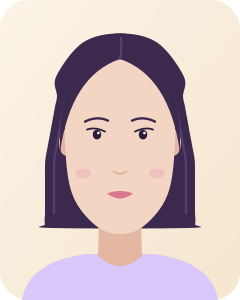
Above Shoulder
-
Medium
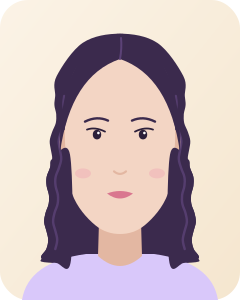
Shoulder to Collarbone
-
Long
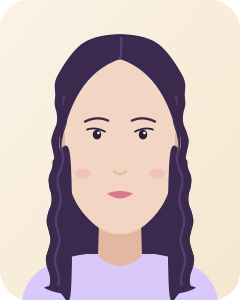
Below Shoulder
-
Extra Long
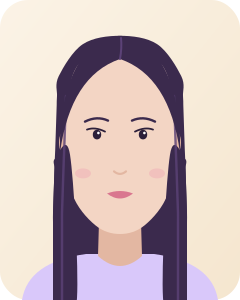
Below Chest
Bangs Recommendations
-
No Bangs
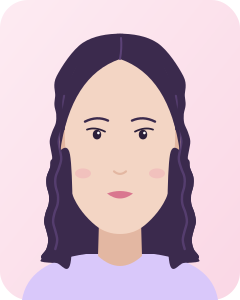
Open Forehead
-
Side Bangs
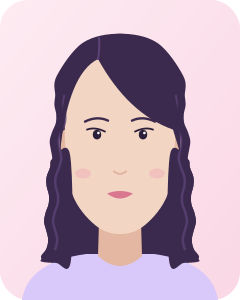
Softens the Face
-
Curtain Bangs
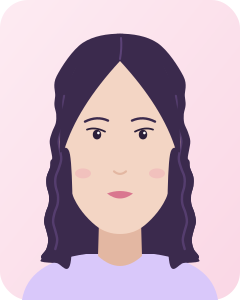
Balances Features
-
Blunt Bangs
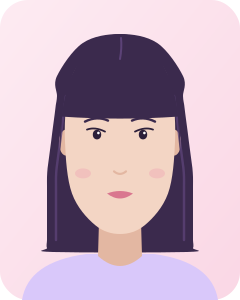
Bold & Edgy Look
Style Notes
Best Overall Pick
See all hairstylesPlease note: Results are estimates based on a single photo and simple ratios, not a definitive classification. Camera angle, lens distortion, hair covering the forehead and facial expression all affect the measurements. Many faces sit between two shapes.
Results are estimates based on a single photo and simple ratios, not a definitive classification. Camera angle, lens distortion, hair covering the forehead and facial expression all affect the measurements. Many faces sit between two shapes.
The basics
What Is an Oblong Face Shape?
A clear definition, the proportions behind it and a simple way to check your own face at home.
Oblong face shape definition
An oblong face shape, sometimes called a long face, is one where the length of the face is clearly greater than its width while the forehead, cheekbones and jawline stay close to the same measurement. Picture a tall oval with flatter sides: the outline does not taper much towards the chin, and it does not flare at the cheekbones. Face shape categories are a styling convention rather than a medical or scientific classification, so think of “oblong” as a helpful description, not a strict label.
Facial proportions
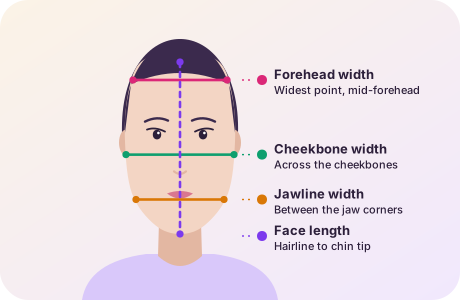
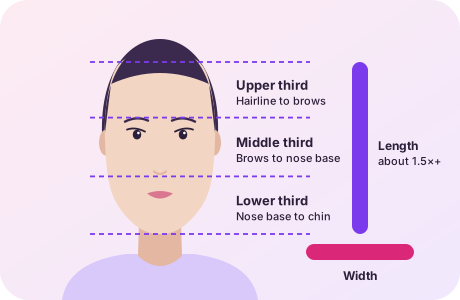
Stylists usually compare four distances: face length, forehead width, cheekbone width and jawline width. On an oblong face the length is often around one and a half times the widest of the three widths, and sometimes more. Artists have long divided the face into three horizontal bands, from hairline to brows, brows to the base of the nose, and nose to chin. Measured faces rarely match those equal thirds exactly, and research on facial proportions has found wide natural variation between individuals. On longer faces, one of these bands, frequently the forehead or the lower third, tends to be taller.
Forehead characteristics
The forehead is commonly tall and may look broad simply because there is more of it on show. Its width, however, is similar to the cheekbones rather than wider. The hairline can be straight, rounded or slightly receded at the corners; none of these changes the overall shape, although a higher hairline increases the measured face length.
Cheekbone structure
Cheekbones on an oblong face sit in line with the temples and jaw instead of projecting beyond them. They can still be high or well defined when seen from the side. From the front, the cheeks usually appear flat or gently curved, which gives the face its straight-sided outline.
Jawline characteristics
The jawline is about as wide as the forehead. Its corners range from softly rounded to moderately defined, and the chin is typically rounded, occasionally a little narrow. When the jaw corners are sharp and the chin is flat and broad, the face is normally described as rectangular, the angular relative of the oblong shape.
Face length and width differences
The length-to-width ratio is the most useful single number. Round and square faces sit near 1:1. Oval, heart and diamond faces are moderately longer than they are wide. Oblong and rectangular faces are the longest group. Because width stays consistent on an oblong face, the difference between its widest and narrowest measurements is small, typically within about ten to fifteen per cent.
How to identify an oblong face shape at home
You need a flexible tape measure, a mirror and good, even light. Tie your hair back and keep your face relaxed.
- Face length: measure from the centre of your hairline straight down to the tip of your chin.
- Forehead width: measure across the widest part of your forehead, about halfway between your brows and hairline.
- Cheekbone width: measure from the outer edge of one cheekbone to the other, starting just below the outer corner of each eye.
- Jawline width: measure straight across from one jaw corner to the other, just below the ears.
Your face is likely oblong if the length is the largest number by a clear margin and the three widths are similar. You can enter these four numbers into the manual option of the face shape test above for a quick calculation. A second method is to trace the outline of your face on a mirror with a washable marker and step back: a tall shape with nearly parallel sides suggests oblong.
Key features
Oblong Face Shape Characteristics
Six features that usually appear together. You do not need every one of them for your face to read as oblong.
-
Longer facial structure
The distance from hairline to chin is the dominant measurement. On most oblong faces it is around one and a half times the widest part of the face, or more.
-
Relatively narrow facial width
Compared with its length, the face is slim from side to side. The narrowness is relative: the face is not small, it is simply taller than it is broad.
-
Similar forehead and cheekbone widths
The forehead, cheekbones and jawline measure within a small margin of one another, so no single zone stands out as the widest point.
-
Elongated facial proportions
One or more of the facial thirds is longer than average. Often it is a taller forehead or a longer lower third between the nose and chin.
-
Straight or gently curved facial sides
From temple to jaw the outline runs almost vertically, with little tapering. Cheeks tend to look flat rather than full or sharply hollowed.
-
Variable jawline and chin shape
The jaw can be softly rounded or lightly defined, and the chin rounded or slightly pointed. A very square, angular jaw points towards a rectangular face.
Hair
Best Hairstyles for Oblong Face Shape
The aim is simple: add width at the sides, shorten the visible forehead, and avoid extra height on top. These cuts do one or more of those things.
Women’s hairstyles
-
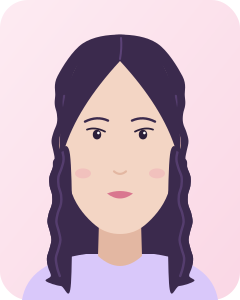
Curtain bangs
Parted in the centre and swept to each side, curtain bangs frame the eyes and cover the outer forehead. They shorten the look of the face and add gentle width at cheekbone level.
-
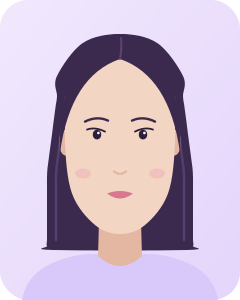
Shoulder-length bob
A bob that ends between the chin and shoulders creates a strong horizontal line near the jaw. That line adds visual width and stops the eye from travelling further down.
-
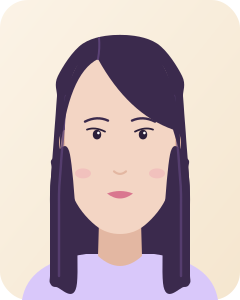
Side-swept bangs
A long, angled fringe crosses the forehead diagonally. It reduces the visible forehead height and is easy to grow out, which makes it a low-commitment way to try bangs.
-
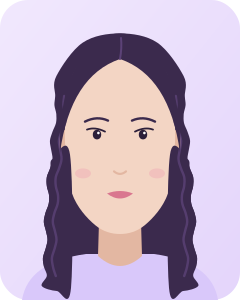
Layered hairstyles
Face-framing layers that start around the cheekbones add movement and fullness at the sides. Keep the layers soft so that the volume sits beside the face, not on top of the head.
-
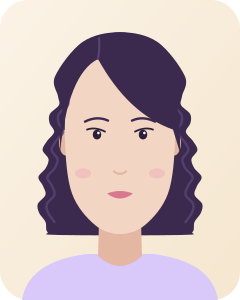
Wavy bob
Waves widen the silhouette of a bob at ear and jaw level. This is one of the most effective cuts for balancing a long face because the fullness lands at its narrowest-looking area.
-
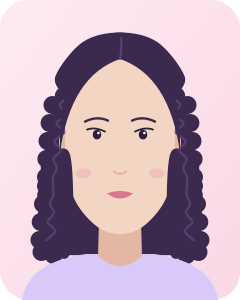
Medium-length curls
Curls worn at collarbone length build width naturally. Shaping them so the fullest point sits around the cheeks gives a rounder overall outline and softens straight facial sides.
Men’s hairstyles
-
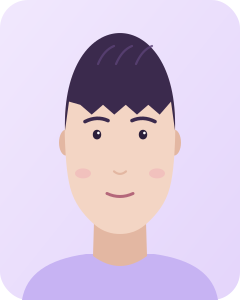
Textured fringe
Hair is cut to fall forward over the forehead in loose, choppy pieces. Covering part of the forehead shortens the visible length of the face, while the texture keeps the look light.
-
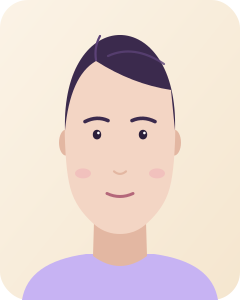
Side part
A classic parting sweeps hair across the head instead of up. The horizontal direction draws the eye sideways, and leaving a little length at the sides stops the face from looking narrower.
-
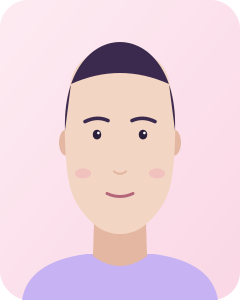
Crew cut
Short on top with only a slight graduation at the sides. Because it adds almost no height, a crew cut keeps the proportions honest. Ask for a low or mid taper rather than a high skin fade.
-
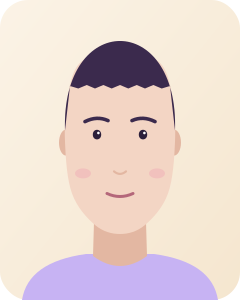
Caesar haircut
A short, even cut with a small horizontal fringe brushed forward. The straight line across the forehead acts like a visual break and trims the apparent length of the upper face.
-
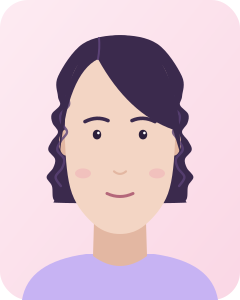
Medium-length layered haircut
Layers that reach the ears or jaw build natural volume at the sides, exactly where an oblong face benefits from width. Works especially well with wavy or thick hair.
-
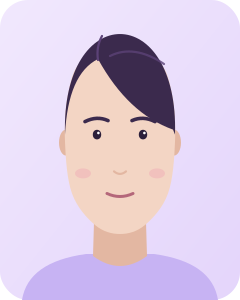
Side-swept hairstyle
A longer fringe is pushed diagonally across the forehead. The sweeping line interrupts the vertical outline of the face and softens a high hairline without a heavy fringe.
Facial hair
Best Beard Styles for an Oblong Face
Facial hair can change the outline of the lower face. For a longer face, keep the chin area short and let the sides carry a little more fullness.
-
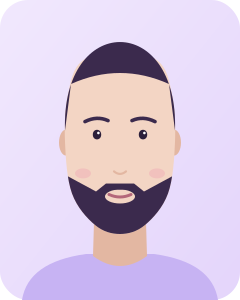
Short boxed beard
Neatly trimmed with clean cheek and neck lines. Keeping the length even and short adds definition and a little width to the jaw without extending the chin.
-
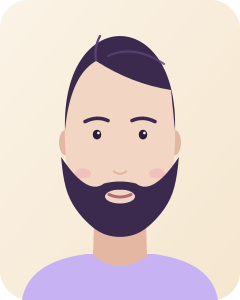
Full beard with side volume
A fuller beard that is left slightly longer on the cheeks and jaw corners than under the chin. The extra width at the sides can make the whole face look broader.
-
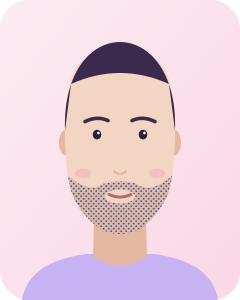
Classic stubble
A few days of even growth adds texture and shadow along the jaw. It gives the lower face more presence while adding no length at all, and it is the easiest style to maintain.
-
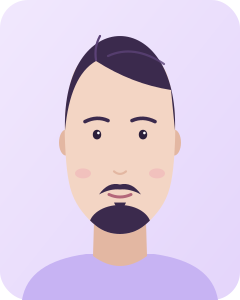
Balbo beard
A moustache with a separate, shaped chin beard and no sideburns. Kept wide and short, it creates horizontal interest around the mouth. Avoid trimming it into a narrow point.
-
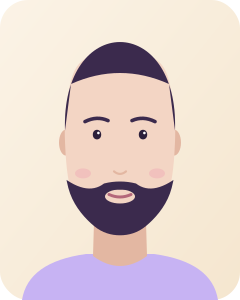
Rounded short beard
Similar to a boxed beard but with a curved outline. The rounded edge softens straight facial sides and a longer chin, giving the lower face a fuller, gentler shape.
Styles that add length below the chin, such as a long goatee or a pointed ducktail, tend to make an elongated face look longer still.
Eyewear
Best Glasses for Oblong Face Shape
Frames with depth, from the top rim to the bottom, break up the length of the face. Width and a strong brow line add balance.
-
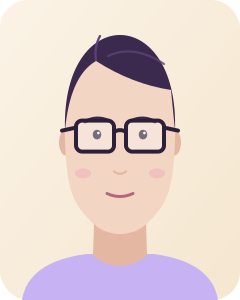
Square glasses
Bold, angular frames add structure and a firm horizontal line across the middle of the face. Choose a pair that is as wide as, or slightly wider than, your cheekbones.
-
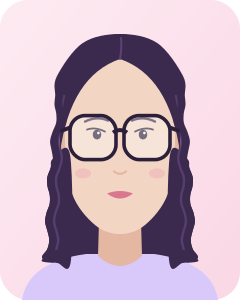
Oversized glasses
Tall lenses cover more of the face from brow to cheek. That added depth visually shortens the mid-face, which is why oversized frames are a frequent recommendation for long faces.
-
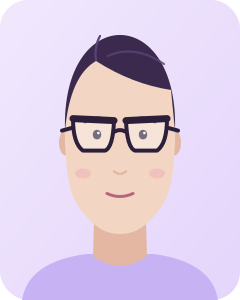
Wayfarer glasses
A heavier top rim and a slightly trapezoid lens put emphasis on the brow line. The strong upper edge widens the look of the upper face and suits most casual styles.
-
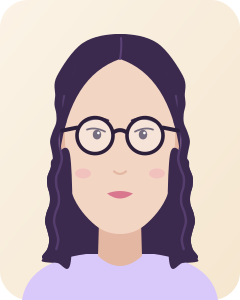
Round glasses
Curved lenses contrast with straight facial sides and add softness. Pick a larger diameter so the frame has enough depth; very small round frames can emphasise length.
-
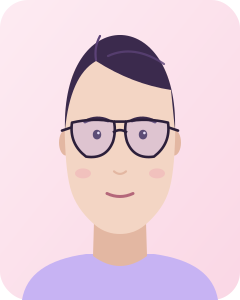
Aviator glasses
The teardrop lens is deeper than most shapes and the double bridge adds a horizontal detail between the eyes. Together they fill more of the mid-face.
-
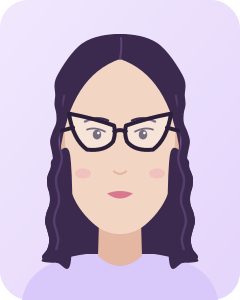
Cat-eye glasses
Upswept outer corners lift attention towards the temples and add width at the top of the face. Look for a deeper lens rather than a narrow, slit-like cat-eye.
Compare
Oblong vs. Other Face Shapes
Face shapes overlap, and most people are a blend. This table shows the feature that most clearly separates an oblong face from each neighbour.
| Face shape | Length vs. width | Forehead, cheekbones, jaw | Jawline and chin | Key difference |
|---|---|---|---|---|
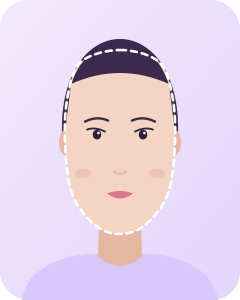 Oblong |
Clearly longer than wide, about 1.5× or more | Forehead, cheekbones and jaw roughly equal | Soft to lightly defined; rounded chin | The reference shape: long, even width, straight sides. |
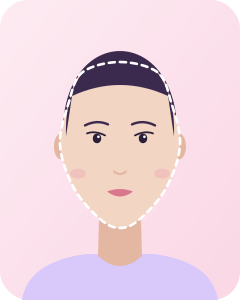 Oblong vs. oval |
Longer than wide, but less so (about 1.3–1.5×) | Cheekbones widest; forehead and jaw taper | Narrower, gently rounded | An oval face curves and tapers towards the chin. An oblong face is longer and keeps its width from top to bottom. |
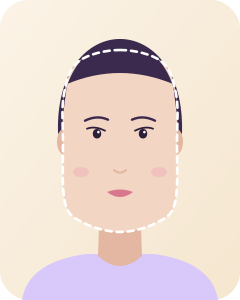 Oblong vs. rectangular |
Similar: clearly longer than wide | Roughly equal throughout | Broad, angular, with sharp corners | Same proportions, different corners. A rectangular face has a squared hairline and jaw; an oblong face is softer and more rounded. |
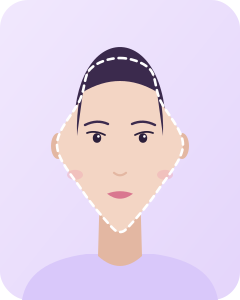 Oblong vs. diamond |
Moderately longer than wide | Cheekbones much wider than forehead and jaw | Narrow with a pointed chin | A diamond face is widest at the cheekbones and narrow at both ends. An oblong face has no single widest point. |
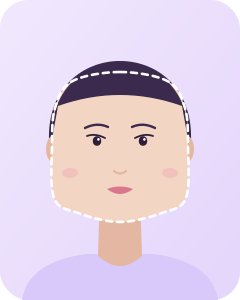 Oblong vs. square |
About equal to the width | Roughly equal throughout | Strong and angular | Both have even widths, but a square face is short. If the width is similar and the face is much longer, it is oblong or rectangular. |
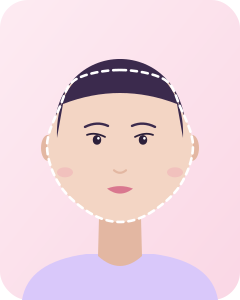 Oblong vs. round |
About equal to the width | Widest at the cheeks, with soft curves | Rounded, with full cheeks | These are near opposites. A round face is short and curved; an oblong face is long with straighter sides. |
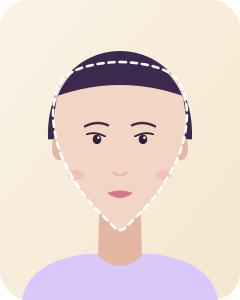 Oblong vs. heart |
Moderately longer than wide | Forehead widest; narrows steadily to the chin | Narrow with a pointed chin | A heart face tapers from a broad forehead to a small chin. An oblong face keeps a similar width at the forehead and jaw. |
FAQ
Frequently Asked Questions
Short, practical answers about identifying and styling an oblong face.
What is an oblong face shape?
An oblong face shape is a long face in which the length is clearly greater than the width, and the forehead, cheekbones and jawline are all roughly the same width. The sides of the face run fairly straight and the chin is usually rounded. It is sometimes described as a stretched oval.
How do I know if I have an oblong face?
Compare four measurements: face length, forehead width, cheekbone width and jawline width. If the length is about one and a half times the width or more, and the three widths are within a small margin of each other, your face is probably oblong. You can check with a tape measure and a mirror, or use the free face shape test on this page for an estimate.
Is an oblong face shape attractive?
Yes. No face shape is more or less attractive than another, and attractiveness depends on far more than outline. Oblong faces are often described as elegant or striking because of their length and balanced width. Styling advice exists to help you highlight features you like, not to correct a flaw.
What is the best haircut for an oblong face?
There is no single best haircut, but the most reliable choices add width at the sides and avoid extra height on top. For women, a shoulder-length or wavy bob and curtain bangs are popular. For men, a textured fringe or a side part with some length at the sides works well. Your hair type and daily routine matter as much as face shape.
What hairstyles suit oblong faces?
Styles with fullness around the cheeks and jaw generally suit oblong faces: layered cuts, waves, curls, bobs and medium lengths. Fringes of most kinds help by shortening the visible forehead. Styles that tend to elongate the face include very long, straight hair with no layers, slicked-back looks and tall quiffs or top knots.
Are bangs good for oblong faces?
Bangs are one of the most effective options for an oblong face because they cover part of the forehead and reduce the apparent length. Curtain bangs and side-swept bangs are the easiest to wear. Fuller, straight-across bangs also work for many people. Ask your stylist to adapt the thickness to your hair texture.
What glasses suit an oblong face?
Look for frames with depth and width: square, oversized, wayfarer, larger round, aviator and cat-eye styles. A deep lens and a strong top rim break up the length of the face. Small, narrow or rimless frames add very little visual balance, so they are usually less flattering on longer faces.
What beard style suits an oblong face?
Beards that are fuller on the sides and short at the chin suit an oblong face. Good examples are a short boxed beard, classic stubble, a rounded short beard and a full beard trimmed closer under the chin. Long, pointed beards and narrow goatees add length, so they are best avoided if balance is your goal.
Is an oblong face shape the same as an oval face?
No, although they are closely related. An oval face is moderately longer than it is wide and is widest at the cheekbones, curving in towards the forehead and chin. An oblong face is longer, and its width stays more constant from forehead to jaw, which gives it straighter sides.
Can an oblong face shape change?
Your bone structure is set in adulthood, so the underlying shape stays the same. Its appearance can shift with weight changes, ageing, dental or jaw treatment and changes to your hairline. Hairstyles, facial hair, glasses and makeup can also change how long or wide your face looks without altering its structure.
How can I measure my face shape at home?
Pull your hair back and stand in front of a mirror in even light. With a flexible tape measure, record your face length from hairline to chin, then the width of your forehead, cheekbones and jawline. Write the numbers down and compare them. The manual measurement option in the face shape test will calculate the ratios for you.
How accurate is an online face shape detector?
An online detector gives a useful estimate, not a definitive answer. It measures distances between facial landmarks in one photo, so the result depends on camera angle, lens distortion, lighting, expression and whether hair hides your hairline. For the best result, use a straight-on photo taken at eye level from about an arm’s length away, and treat the outcome as a starting point.